
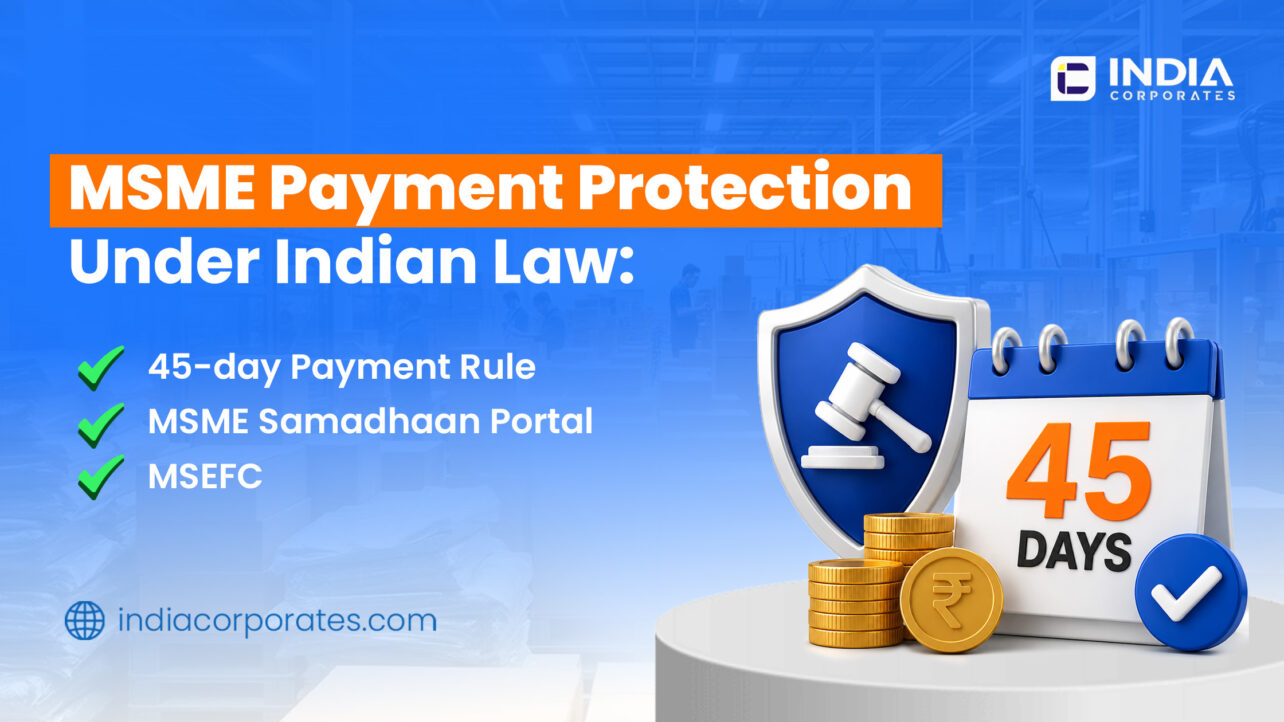
One of the biggest advantages of MSME registration is legal protection it offers against delayed payments. Recognizing financial challenges faced by small businesses, Government of India introduced specific MSME Payment Protections under MSME Development Act, 2006, for Micro and Small enterprises to receive payments on time.
MSMEs often face problems with delayed payments from customers which can disrupt cash flow, affect employee salary payments, impact supplier relationships and slow overall business growth. To help small businesses, government has provided several solutions, such as 45-day Payment Rule, interest on delayed payments, option to file complaints through MSME Samadhaan Portal and support from Micro and Small Enterprise Facilitation Council (MSEFC). This helps MSMEs recover their pending payments and maintain better financial stability.
What is MSME
MSME stands for Micro, Small and Medium Enterprises. These are businesses involved in manufacturing, trading or providing services. MSMEs play major role in India’s economy by creating jobs, supporting economic growth at both local and national levels. MSMEs help create job opportunities, encourage entrepreneurship and strengthen supply chains across industries.
Even though their significant contribution many MSMEs face payment challenges such as:
- Delayed Payments: Customers take weeks or months longer than agreed to pay invoices.
- Cash Flow Issues: Late payments reduce the money available for daily business operations.
- Salary Payment Delays: Businesses may struggle to pay employees on time due to a lack of funds.
- Supplier Payment Challenges: MSMEs may find it difficult to pay vendors and suppliers, affecting business relationships.
- Increased Borrowing: Many businesses take loans or use credit lines to manage expenses while waiting for payments.
- Higher Interest Costs: Borrowing money to cover delayed payments increases financial costs.
- Business Growth Delays: Lack of working capital can prevent businesses from investing in expansion, equipment, or new opportunities.
- Operational Disruptions: Day-to-day activities may be affected due to insufficient funds.
- Uncertainty in Financial Planning: Delayed payments make it difficult to forecast income and manage budgets effectively.
- Dependency on a Few Customers: If a major customer delays payment, the business may face significant financial pressure.
- Payment Disputes: Buyers may delay payments due to invoice errors, quality concerns, or contract disagreements.
- Bad Debt Risk: In some cases, payments may never be received, resulting in financial losses for the business.
To support MSMEs in their growth and sustainability, Government of India provides various benefits and MSME Payment Protection, including easier access to credit, participation in government schemes and legal safeguards against delayed payments under MSME Development Act.
MSME Development Act for MSME delayed payments
The MSME Development Act 2006 provides legal MSME Payment Protection to Micro and Small Enterprises against delayed payments from buyers. The objective of this Act is to ensure that small businesses receive their payments on time and do not face financial difficulties due to long payment cycles.
According to Act, when udyam registered Micro or Small Enterprise supplies goods or services to buyer and buyer must make payment within agree period mentioned in contract. But even if both parties agree to longer payment term, payment period cannot exceed 45 days from date of acceptance or acceptance of the goods or services. If there is no written agreement regarding payment terms, buyer is required to make payment within 15 days of accepting goods or services.
Act also provides formal dispute resolution mechanism through Micro and Small Enterprise Facilitation Council (MSEFC). If payment remains unpaid after many reminders and follow-ups, MSMEs can file complaint through MSME Samadhaan Portal and seek recovery of their dues.
Why 45-Day Rule Matters for MSME Payment Protection
The 45-day payment rule is legal MSME Payment Protection provided to Micro and Small Enterprises (MSEs) under Section 15 of MSMED Act, 2006. It requires buyers to make payments for goods supplied or services withing specified time limit.
According to this rule, when MSME supplies goods or services to buyer, payment must be made within agreed time period, even if both parties decide on longer timeline, payment period cannot exceed 45 days from date goods or services are accepted. If there is no written agreement between buyer and MSME, then payment must be made within 15 days of acceptance.
If buyer fails to make payment within prescribed period, MSME supplier has legal right to claim interest on amount. Under MSMED Act, 2006 interest is calculated at three times bank rate notified by Reserve Bank of India (RBI). this interest is added to amount every month and future interest is calculated on increased balance.
Main purpose of this rule is to improve cash flow for MSMEs. Small businesses often depend on regular payments to manage daily expenses like salaries, raw materials, rent and other operating costs. The 45-day rule also promotes fair business discipline by preventing large companies from using small suppliers as source of free credit by delaying payments. If buyer does not follow rule, MSMEs have legal right to claim interest on delayed amount.
MSME Samadhaan Portal
MSME Samadhaan Portal is an online platform launched by Ministry of Micro, Small and Medium Enterprises (MSME) (Section 15 – 24) to help Micro and Small Enterprises recover delayed payments from buyers. The portal allows Udyam registered businesses to file complaints against buyers who fail to make payments within time limit prescribed under MSMED Act, 2006
MSME Samadhaan Portal is digital dispute resolution system where MSMEs can submit delayed payment claims and track status of their cases online. Once complaint is filed, it is automatically forwarded to concerned Micro and Small Enterprise Facilitation Council (MSEFC), which is responsible for handling and resolving dispute.
Key Benefits of MSME Samadhaan
- Provides simple online process for filing delayed payment complaints.
- Helps MSMEs recover outstanding dues along with applicable interest.
- Enables businesses to track the progress of their cases online.
- Reduces the need for lengthy and costly court proceedings.
- Promotes transparency and accountability in payment disputes.
- Encourages buyers to make timely payments to avoid legal consequences.
Micro and Small Enterprise Facilitation Council (MSEFC)
Micro and Small Enterprise Facilitation Council (MSEFC) is government-established authority that helps Micro and small enterprises recover payments that are delayed by buyers. MSEFC is legal platform for resolving payment disputes that operates under Micro, Small and Medium Enterprises Development (MSMED) Act, 2006
When buyer fails to make payment within time limit prescribed under MSMED Act, Udaym registered micro or small enterprise can get MSEFC for assistance. Council will reviews matter and attempt to resolve dispute between parties. If settlement cannot be reached council can proceed with further legal action as provided under law. MSEFC plays key role in applying MSME payment protection laws. It helps businesses recover outstanding dues and claim interest on delayed payments.
Key Functions of the MSEFC
- Resolves payment disputes involving micro and small enterprises.
- Assists MSMEs in recovering unpaid invoices.
- Facilitates settlement of disputes between buyers and suppliers.
- Helps eligible MSMEs claim interest on delayed payments.
- Supports implementation of 45-day payment rule under MSMED Act.
How MSMEs Can Avoid Delayed Payments
Even MSMED Act provides legal MSME Payment Protection against payment delays, but prevention is always better than dispute resolution.
- Start by clearly defining payment terms in all contracts, purchase orders and invoices. Payment due date, mode of payment and other conditions should be communicated in writing before supplying goods or services.
- It is also important to issue invoices properly and maintain documentation, including purchase orders, delivery receipts, work completion certificates and email communications. These records can help avoid disputes and serve as evidence if payment recovery becomes necessary.
- Regular follow-up can encourage buyers to make payments on time. Businesses should monitor invoices and send reminders before and after due date. Building structured payment tracking process can help identify delays early.
- Before any large transactions, MSMEs should check buyer’s financial reliability and payment history. Working with trustworthy customers can help reduce chances of payment-related issues.
Tip: Use Digital Tools for Better Payment Management
Use invoice generator software that businesses use to create and manage invoices in organized way while also tracking payments easily. It makes businesses look more professional and helps improve customer relationships by keeping billing clear.
Invocreto WhatsApp invoicing is also very useful for small businesses. It allows users to create invoices, share payment links and receive payments directly on WhatsApp. This is especially helpful for businesses whose customers regularly use WhatsApp; it makes payment process quick, simple and more convenient.
Final thoughts
MSME payment delays are one of most common challenges faced by small businesses in India. When buyers do not pay on time, it can affect daily operations, slow down business growth and create cash flow problems. To prevent this issue 45 day payment rule under Indian MSME Payment Protection law was introduced to ensure timely payments and better financial discipline. When payments are not made on time, they can approach MSEFC (Micro and Small Enterprise Facilitation Council) to raise complaint and seek recovery of their dues with applicable interest. This legal support gives small businesses stronger voice and protection against payment delays.
Clear payment terms, proper documentation, timely invoicing and regular follow-ups reduce payment delays and with simple digital tools for tracking invoices and payments make big difference to businesses. When buyers pay on time and MSMEs manage payments well, it creates stronger relationships, better financial stability, and healthier business ecosystem for everyone.

No comments yet